16 September 2026 – written by Steffen Kemmerzehl – Friendly Assist Accountancy – The Accounting Hub
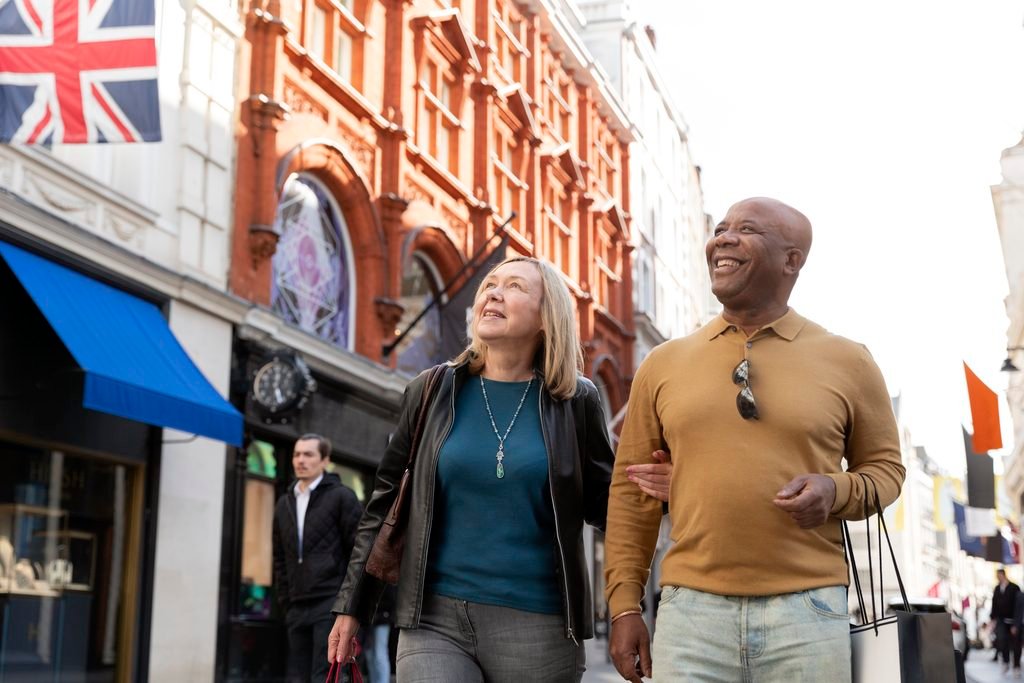
If your business is based outside the UK but you regularly spend money here, you may have noticed that UK VAT can quickly add up. Perhaps you have travelled to London for a trade show, paid for hotels and business travel, used a UK professional adviser or bought goods and services from UK suppliers. After a while, you may start looking through your accounts and wondering whether all that VAT really has to remain a cost to the business.
There is a UK VAT refund scheme for certain businesses established outside the UK, so in some circumstances the answer can be yes. However, it is not simply a case of collecting your receipts and asking HMRC for the money. The rules depend on where your business is established, what it does in the UK, why the VAT was charged and whether you have any obligation to register for UK VAT.
That last point is particularly important. An overseas business that is making taxable supplies in the UK may have UK VAT registration obligations, in which case the overseas VAT refund scheme may not be the right route.
A typical overseas business VAT problem
Imagine that your company is based in Germany and you send two directors to a trade exhibition in Birmingham. You pay UK VAT on the exhibition stand, hotel accommodation, taxis and perhaps some professional services connected with the event. None of this feels particularly complicated while you are planning the trip, but afterwards you could be looking at several thousand pounds of VAT sitting in your accounts.
A similar situation can arise for a US company sending employees to the UK, a business based in the UAE attending conferences in London, or an overseas consultancy that regularly sends staff to Britain for meetings with customers.
There is nothing unusual about these situations, and being a relatively small business does not automatically prevent you from looking at the VAT refund scheme. The important question is whether the business meets HMRC’s conditions and whether the expenses themselves are eligible.
HMRC’s VAT Notice 723A explains the rules for businesses established outside the UK that want to reclaim UK VAT.
The first question is whether you should be claiming a refund
This is probably the part that causes the most confusion.
An overseas business might have paid UK VAT, but that does not automatically mean that it should use the overseas refund scheme. HMRC’s rules generally require the claimant to be established outside the UK and not registered, liable or eligible to be registered for UK VAT. The business must also generally have no UK place of business or other fixed establishment and must not make supplies in the UK, although there are specific exceptions.
That means the nature of your UK activity matters just as much as the VAT on your invoices.
A company that comes to Britain once a year for a conference is in a very different position from an overseas business that sells directly to UK customers, keeps stock in a UK warehouse or has people regularly working here. Both businesses might have UK VAT on their expenses, but the VAT treatment can be very different.
HMRC’s VAT registration guidance is therefore just as important as its refund guidance when looking at an overseas business.
Could you need to register for UK VAT?
This is worth checking before submitting a refund claim.
Businesses established outside the UK can have different VAT registration rules from businesses established here. In particular, a non-established taxable person can be required to register for UK VAT when making taxable supplies in the UK, and the normal UK registration threshold does not necessarily protect an overseas business from registration.
This can catch people out when a business gradually develops a UK customer base.
Perhaps you started by attending a conference in London and then picked up a customer. That customer introduced you to another company, and before long you are travelling to Britain several times a year and invoicing UK clients regularly. The business may have changed considerably from the point when you first started collecting UK VAT receipts.
This is why I would always want to understand what the business actually does before deciding that a VAT refund is appropriate.
If your business has started selling into the UK, our VAT support can also help with the wider UK VAT position.
What can an overseas business claim?
The refund scheme can cover eligible UK VAT incurred on goods and services, subject to the detailed rules. It can also cover certain import VAT.
In practical terms, this can be relevant to businesses that incur UK VAT on things such as trade exhibitions, business travel, accommodation, professional services, equipment and other legitimate business expenses.
However, you cannot assume that every UK invoice containing VAT will qualify. There are restrictions on certain types of expenditure, and the business also needs to meet the conditions of the scheme as a whole.
This is why it is useful to keep the original invoices and enough information to explain what the expense was for. A receipt saying that something was purchased in Britain does not necessarily tell HMRC everything it needs to know about the claim.
How does the claim work?
Eligible overseas businesses normally use form VAT65A to make their claim.
HMRC’s current guidance allows claims to be submitted electronically through its Secure Data Exchange Service. Supporting information can include the application itself, invoices and, where required, evidence confirming the business’s status in its home country.
The VAT65A form also makes provision for an agent to complete the application on behalf of the business.
That can be useful if you are based overseas and would rather have someone familiar with the UK system deal with the claim and any correspondence that follows.
At Friendly Assist Accountancy, we can review the circumstances first and, where the claim is appropriate and we are instructed to act, help with the UK side of the process.
What documents will you need?
The paperwork is an important part of the claim, so it is worth getting organised before starting.
You will generally need the relevant VAT invoices and information showing what the expenditure was for. Depending on the circumstances, import documents and a certificate of status from the relevant authority in your home country may also be required.
This is one reason I would not recommend waiting until the end of the claim period to start looking through a year’s worth of expenses. If something is missing, you want enough time to find it or establish whether another form of evidence is acceptable.
For a business with only a handful of UK expenses, this may be quite straightforward. For a business that has been travelling to Britain regularly, the first job may simply be sorting the expenses into those that are potentially relevant and those that are not.
There is a deadline for making the claim
The standard prescribed year for the scheme runs from 1 July to 30 June, and the normal deadline for submitting a claim is 31 December following the end of that prescribed year.
For example, a claim covering the prescribed year ending 30 June 2026 would normally need to reach HMRC by 31 December 2026.
That can be surprisingly easy to miss, particularly if the business’s accounting year follows a different pattern. A company with a December year end may naturally think about VAT refunds at the end of December or when its annual accounts are prepared, even though the relevant VAT refund period follows a different timetable.
HMRC’s VAT refund guidance explains the claim periods and deadlines.
What has changed for international VAT groups?
There is an important recent development for overseas businesses that belong to VAT groups.
On 8 September 2026, HMRC updated its guidance following a change in how VAT refund claims from non-UK businesses in VAT groups should be handled. For VAT incurred from 1 July 2026 onwards, HMRC says the non-UK business that actually incurred the VAT must make the refund claim rather than relying on the representative member of the VAT group.
There are transitional arrangements for VAT incurred during the 2025/26 prescribed year, so businesses affected by the change need to look at the relevant dates rather than applying the new rule retrospectively to everything.
There is also an interesting opportunity for some businesses whose claims were rejected in the past. HMRC says that certain rejected claims relating to VAT incurred from 1 January 2021 can now be reviewed where the claim was rejected because the representative member of the VAT group did not submit it correctly.
The deadline for asking HMRC to review an eligible rejected claim is 31 August 2027.
If your business is part of an international VAT group and you have previously had a UK VAT refund claim rejected, it is therefore worth checking the reason for the rejection and the dates involved. HMRC’s Revenue and Customs Brief 8 (2026) explains the change.
“We have been paying UK VAT for years. Can we claim it back?”
This is a question that can be more complicated than it first sounds.
Perhaps your business has been sending people to the UK for years and nobody ever looked into the VAT. Perhaps your previous accountant dealt with your home-country tax but did not advise on UK VAT. Or perhaps you tried to make a claim yourself and HMRC rejected it because something was missing.
The first thing I would want to establish is how the VAT arose and whether the business was eligible for the refund scheme during the relevant period.
A historic claim is not necessarily the same as a current claim. Deadlines, documentation and the business’s activities during the relevant period all matter.
The recent VAT-group change is particularly worth knowing about because HMRC has specifically identified some historic rejected claims that may now be reconsidered.
What about a business that sells to UK customers?
This is where the conversation can move beyond VAT refunds.
An overseas business might start with a few UK expenses and no UK customers. Later it might begin selling goods or services to people and businesses in Britain.
Perhaps you are a software company based in the US with a growing UK customer base. Perhaps you are a consultancy based in Europe and now have several British clients. Perhaps you are based elsewhere and have started holding stock in the UK so that you can deliver orders more quickly.
At that point, the question is no longer simply whether you can recover VAT on your hotel bills or professional fees.
You may need to consider whether the business has a UK VAT registration obligation and how VAT should be accounted for on its sales.
That is why an initial review can be more useful than jumping straight into a VAT65A application.
What about trade shows and business travel?
Trade shows are a particularly common reason for overseas businesses to start asking about UK VAT.
The business may have paid for the stand, accommodation, transport, printing, event services and other costs. None of those expenses necessarily means the business has started trading in the UK, but the overall circumstances still need to be considered.
The same applies to business travel. A company based overseas may send staff to London several times a year for meetings and training and gradually build up a sizeable amount of UK VAT.
If this sounds familiar, it is worth keeping the invoices rather than assuming that the VAT is simply lost.
The amount may be relatively small one year and much more significant the next.
What if you are based in the US, Europe, the Middle East or elsewhere?
The scheme is not restricted to one particular country. What matters is whether the business and the expenses meet the relevant UK rules.
The details can still differ depending on the country in which the business is established, particularly when it comes to evidence of business status and the wider VAT relationship between the two countries.
For example, a German company, a US company and a business based in the UAE may all have UK VAT to consider, but their wider international tax and VAT circumstances will not necessarily be identical.
If there are other tax issues involved, such as tax residence, permanent establishment or overseas sales taxes, we can deal with the UK side and identify where advice from a local adviser is needed.
You do not need to know the answer before you contact us
If you have been searching online and have ended up reading about VAT65A, non-established businesses, VAT groups and registration thresholds, you may already have discovered that the rules are not particularly easy to navigate.
You do not need to work out which category you fall into before speaking to us.
At Friendly Assist Accountancy, I can start with the practical facts: where your business is based, what it does, what you have been buying in the UK and whether you have any UK customers, staff, office or other business presence.
From there, we can look at whether an overseas VAT refund appears to be appropriate and what would be involved in making a claim.
If UK VAT registration needs to be considered instead, I will explain why. If the issue extends into another country’s tax system, I will also be clear about where additional local advice may be needed.
What does the service cost?
I have deliberately not put a fixed price on this page because there is a big difference between a straightforward claim involving a small number of invoices and a more involved case involving historic claims, a VAT group or questions about UK VAT registration.
We can discuss your circumstances first and provide a fee after consultation, so you know what the work will cost before deciding whether you want us to proceed.
There is no need to prepare a complicated report before getting in touch. A short description of where your business is based, what you have been buying in the UK and roughly how much VAT is involved is a good place to start.
If you think your business may have UK VAT to reclaim
If you are based outside the UK and have accumulated UK VAT through business activities here, it may be worth taking a closer look before simply treating it as another cost.
Perhaps it is a few hundred pounds from several business trips. Perhaps it is several thousand pounds from a trade exhibition or professional services. Perhaps you have a much larger historic issue or are part of an international VAT group affected by the recent HMRC changes.
Whatever the starting point, we can look at the facts together and work out what needs to happen next.
Get in touch with Friendly Assist Accountancy and tell us where your business is based, what the UK VAT relates to and approximately how much is involved. We can then discuss your situation and the appropriate next step.
I’m Steffen Kemmerzehl, an AAT Licensed Accountant at Friendly Assist Accountancy. I work with UK and international clients on accounting, tax and cross-border matters.

I’m Steffen Kemmerzehl, an AAT Licensed Accountant at Friendly Assist Accountancy. I work with UK and international clients on tax residence, overseas income, pensions, property and other cross-border UK tax matters.
Please get in touch if you’re interested in arranging an appointment.
Useful resources
HMRC: Refunds of UK VAT for non-UK businesses – VAT Notice 723A
Read the HMRC guidance
HMRC: Revenue and Customs Brief 8 (2026) – UK VAT refunds for non-UK businesses in a VAT group
Read the HMRC update
HMRC: VAT65A – Application for refund of VAT by a business not established in the UK
View the VAT65A form